Category Archives: news

Valentine’s Day Special

THIS DEAL HAS EXPIRED 

If you are interested in doing something like this please contact us for current availability.


Looking for a unique gift for your Valentine? Show off your creativity by arranging to learn something new together or share something that you may already enjoy with your significant other.

Whether you want to train as a team or compete a little (what’s better than a little competition to get the adrenaline pumping?) a date at the range might be just the ticket! Better yet, make it a double date with friends for just a bit more and share the fun!

Custom packages are available at our private range, with our highly qualified instructor, 7 days a week. Book by February 16th for this Valentine’s Day special price and a printable gift certificate for your Valentine will be sent by email.

Your date (day, night or afternoon) at the range includes:

  • Two hours of private range instruction, catered to your skill level
  • Pistol rental including up to 100 rounds/person
  • All required safety equipment
  • Targets

Private for 1 couple = $150 weekend, $125 weekday
Double Date (2 couples) = $225 weekend, $200 weekday
Three or more couples = $100/couple

Must be scheduled between now and the end of May – we have many dates available, call Dean today at 810-882-1212 to book your date.

*Must be over 18 and have a valid state issued ID
*Range times can be adjusted for weather as needed

Opt-Out of Handgun Registration

Shifting Tides: A Landmark Opinion on Firearm Ownership and State Databases

A significant legal opinion from the Michigan Attorney General’s office has brought a monumental clarification to the landscape of firearm ownership, particularly concerning state-level record-keeping. This development fundamentally redefines how certain firearms are understood in relation to governmental databases, signaling a departure from long-held assumptions about state “registration” of handguns.

It is my opinion, therefore, that a Michigan resident who holds a concealed pistol license issued by another state is exempt under subsection 12(1)(f), MCL 28.432(1)(f), of the Firearms Act from obtaining a license to purchase, carry, possess, or transport a pistol as required by section 2, MCL 28.422, but is not exempt from obtaining a concealed pistol license under section 5b, MCL 28.425b, of the Act, in order to carry a concealed pistol in Michigan.“ – AGO #7304 (6/19/18)

For years, the interpretation of state firearms laws has led many to believe that the state maintained a comprehensive “registration” database of all lawfully possessed handguns. This understanding suggested that for a pistol to be legally owned, its details must be officially recorded with the state. However, the Attorney General’s opinion, issued in June 2018, challenges this notion directly and emphatically.

The core of this opinion centers on the distinction between a transaction record and a possession record. It asserts that the state’s existing database is primarily a record of transactions involving qualifying firearms, rather than a definitive registry of all firearms in circulation. This distinction is crucial, as it acknowledges that there are various legitimate pathways for individuals to lawfully possess firearms without them being “registered” in the traditional sense within the state’s database.

Specifically, the opinion highlights that individuals holding a concealed pistol license issued by another state are exempt from the requirement to obtain a state-issued license to purchase, carry, possess, or transport a pistol within the state. This means that a person with such an out-of-state license can lawfully acquire and possess a handgun without it being entered into the state’s “registration” system. This interpretation aligns with the existing legal framework which, upon closer examination, provides for such exemptions.

The implications of this opinion are profound. It confirms the existence of lawfully possessed firearms that are not found within the state’s record-keeping system. This clarification underscores that the absence of a firearm from the state’s transaction database does not automatically equate to unlawful possession.

This reinterpretation has significant ramifications for both firearm owners and law enforcement. For owners, it clarifies their rights and the legal avenues for possessing firearms. For law enforcement, it necessitates a recalibration of how firearm records are viewed and utilized, emphasizing that the state’s database is not an exhaustive list of all legally owned firearms.

Ultimately, this Attorney General’s opinion represents a paradigm shift, solidifying the understanding that the state’s record system is designed to track qualifying transactions, not to create a universal registry of all possessed handguns. This nuanced understanding brings greater clarity to firearm laws and ensures that lawful possession is not erroneously equated with presence in a state database.

Moving to Michigan with a valid concealed carry permit CCW?

Michigan’s CPL (concealed pistol license) application requirements state that an applicant must be:

  • a citizen of the United States
  • a legal resident of Michigan
  • have resided in this state for not less than 6 months OR if you have a valid concealed carry permit from the state you are moving from, the 6-month waiting period is waived.

You are considered a resident of Michigan once you obtain a driver’s license, personal identification card, or register to vote. (see the complete statute for military residency requirements).

Michigan does not recognize permits from other states unless you are a resident of that state, so once you do establish residency here, your out-of-state permit is not valid for concealed carry in Michigan.

You will still need to take the Michigan CPL training course before you apply because no other state’s training meets the requirements of Michigan’s law, but you can speed the process up by taking the course before you establish residency.

Let me repeat that: If you don’t want to be without a valid license to carry any longer than you have to, you should take your CPL Course BEFORE you “establish residency here” so that you can apply the day you establish residency.

After you have filed your completed application, the approval process usually only takes a couple of weeks and no more than 45 days. More about the process here.

VERY GOOD CLASS! Dean did a great job. The setting was relaxed, friendly, and appropriately interactive. On the range, it was no-nonsense, safety first, with excellent personalized instruction. I benefited greatly from the training perspective of an ambush situation and the “balance of speed and precision” drills. I am a California CCW holder moving to Michigan so I’ve been through an approved training class. Dean’s range portion of the class was superior in my opinion as he taught us more “real life” tactics without the drill sergeant approach. When we move I plan to bring my wife for some additional personal training. – Jeff Holm


Why Guns Malfunction

Reliability (the gun’s ability to function correctly 100% of the time) is the #1 criteria in selecting a defensive firearm.

Most people think that means things like;

  • It has a good warranty.
  • It looks cool!
  • My friend says his works for him.
  • The gun store says people really like this model.
  • I’ve heard of that brand.

But…

  • A “lifetime warranty” won’t do you any good if you are dead.
  • There’s a pretty good chance the gun store salesman is making a better commission on some guns.
  • How much professional training has your friend had with that gun? (And no, I’m not talking about how many rounds he’s fired target practicing!)

Guns are machines, and machines have a tendency to malfunction … or break. Generally, the more complex the machine (external safeties, magazine disconnects, sear deactivation levers, chamber indicators, ambidextrous controls, etc…), the more there is to go wrong.

Anyone who has spent even a little bit of time on a range has had or at least seen a firearm malfunction. If you read news coverage and police reports, you will find countless examples where a shooter has had a malfunction.

A gun can malfunction for a myriad of reasons:

  1. Ammunition malfunction. There are cases in which the bullet itself doesn’t fire, be it because of a bad primer or that it wasn’t manufactured correctly.
  2. Mechanical Malfunction. The gun may jam because it was not properly maintained or because a piece of it was damaged (springs, levers, guide rod, take your pick), dirty, or worn out.
  3. Shooter Error. Guns often malfunction due to how the shooter is operating the gun. Something as simple as arm position or grip strength can lead to a  malfunction in a lot of guns. Touching one of those ambidextrous controls that you might need someday.
  4. Outside Interference. Guns are generally built to operate without outside interference. That is, that the base of the weapon stays stationary and all the moving parts can move freely around it. Being able to stop the slide of a handgun from moving takes very little pressure at all. Stopping a bullet from properly ejecting is even easier.

When we take all of this into account, we learn that some guns are much more reliable in real-life situations, where we need them most, and where their abilities are truly tested.

This is why we recommend the guns we recommend.
Airport Carry

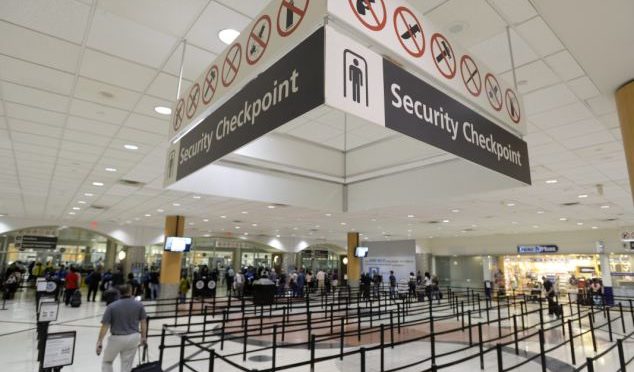
Federal laws restrict firearms (and other weapons) in the sterile areas beyond the security checkpoints. But most states (including Michigan and 43 others) allow the carrying of firearms in the common terminal and baggage claim areas of airports.

Florida, and only five other states, make the entire airport terminal off limits even to carry license holders while armed. Of course, this didn’t stop the shooter today in Fort Lauderdale in the baggage claim area.

While the TSA has previously considered adding unsecured areas to their ban, a recent Missouri Court of Appeals decision overturned that state’s ban.

This means that you can legally conceal carry into the terminal, up until you get to the TSA checkpoint, at which point you can check an unloaded and secured (per TSA rules) firearm, then when you pick it up at the baggage claim you are usually good to go into a restroom and load back up so you can be carrying on your way out the door (which is what I usually do).

For some reason, even though there is no security check points going into or out of the airport, Florida, Oklahoma, North Dakota, Illinois, Virginia and Arkansas don’t trust you there while actually carrying.

You will need to check with each of those state if you are flying there to see what their policy is on how to transport your checked firearm in and out if you want to take it flying.

5 Questions Women Should Ask Before They Get a Gun

Last month an article by this name was published by a fellow firearms trainer writing for PJ Media, and some of his questions are pretty good, like this one:

Are you ready for the responsibility of owning a firearm?

However, the first, and most important question for anyone before they get a gun should be: Have you had any training? 

You won’t understand if you are ready for the responsibility of owning a firearm, or what kind of firearm is best for your needs without it.

Get competent training before you buy a gun. 90% of the people that come to me for training with a new gun leave wishing they had bought something different. They could have easily saved more than the training time cost by coming and learning what works best for them in the context of what they want it for before they buy.

His suggestion about where to find good advice about what to buy; “ask your local gun store” is the last place I would suggest you go (unless of course, the dealer is willing to tell the person to go to a defensive firearms instructor for help first). 

Uneducated, and untrained people should not be asked: “do you want to carry a revolver or a semi-automatic pistol?” – they should be trained and educated by a competent instructor that can help them figure that out – so they can pick the best gun for their specific needs and abilities.

We have lots of guns you can try, and lots of experience helping new shooters (men and women) figure out what they need.

How long is a CPL certificate good for in Michigan?

Five Years.

As of December 1, 2015, Michigan law was amended to require that the training for a CPL application be provided within 5 years preceding the date of application.

Prior to this amendment, there was no such requirement. Every county clerk handled the issue differently. Some required the certificate to be within 6 months, some never considered it expired.

See Public Act 372 of 1927 Section 28.425j for the complete law with references.